



The island of the Knights
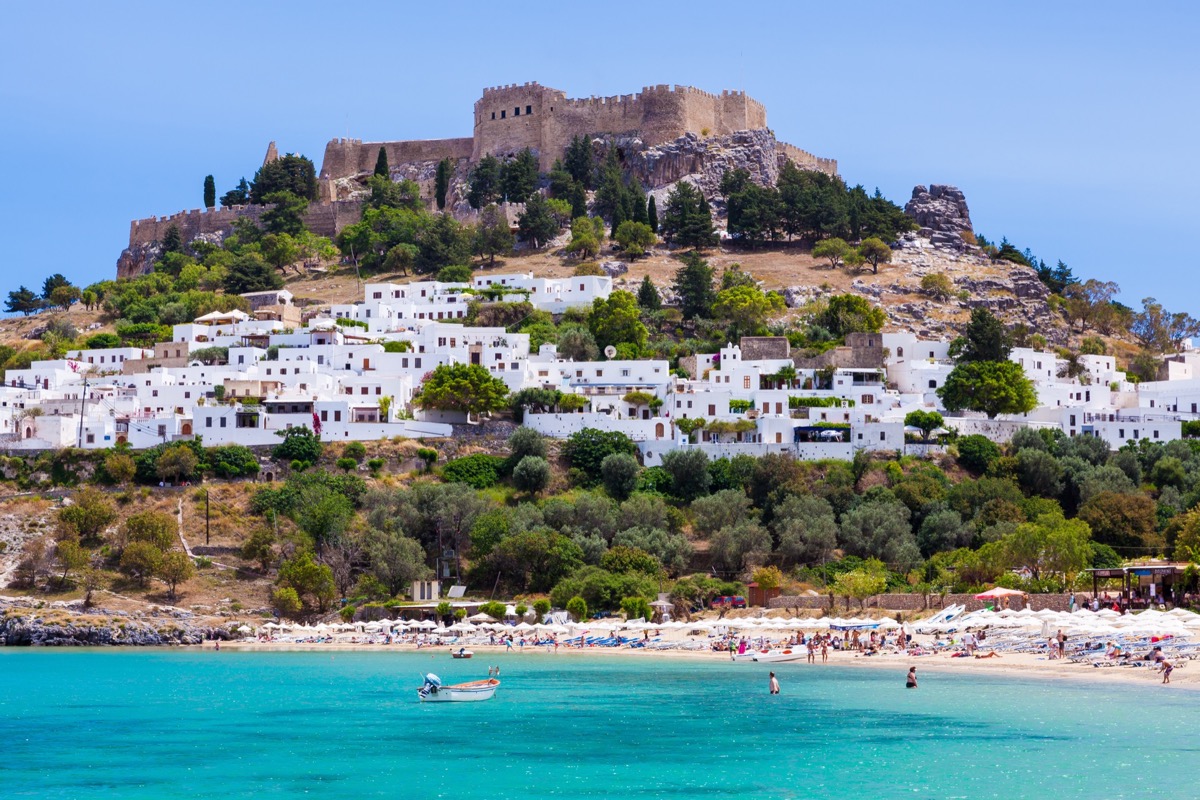
Welcome to Rhodes, the capital of the Dodecanese, an island which is ideal not only for those who want to relax but also for those looking for an action-packed holiday! With its bright green hills, rich green valleys and uninterrupted line of golden beaches, Rhodes is truly a blessed place. Add in the excellent facilities for tourism, the island’s special blend of cosmopolitan and traditional, and numerous cultural and archaeological sites and you’ve got the perfect holiday destination.
Medieval City of Rhodes
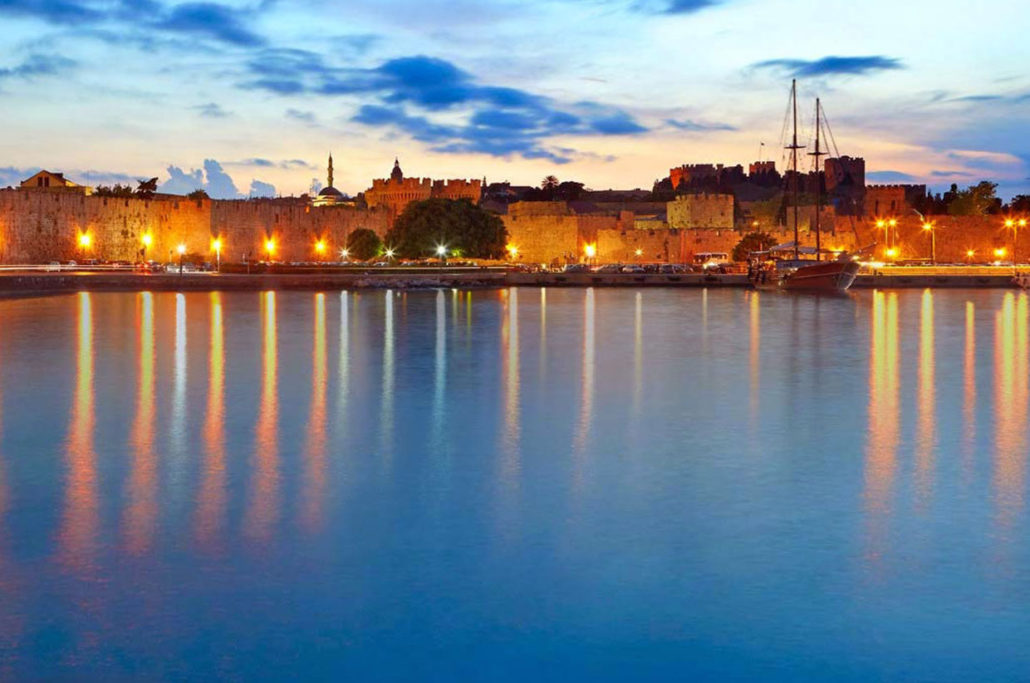
As you enter one of the largest medieval towns in Europe through the Gate of Freedom, it soon becomes obvious that the Old Town of Rhodes is a mosaic of different cultures and civilizations; rarely does a visitor have the chance to stroll within medieval walls and explore twenty-four centuries of history. The fascinating medieval fortress-like buildings, the bastions, walls, gates, narrow alleys, minarets, old houses, fountains, tranquil and busy squares make it feel like you have stepped back into medieval times.
The Palace of the Grand Master is certainly the highlight of the Old Town. The Palace, originally a Byzantine fortress built at the end of the 7th century A.D., was converted in the early 14th century by the Knights of the Order of Saint John into the residence of the Grand Master of the order and the administrative headquarters of their state; now it has been turned into a museum.
The cobblestoned Street of the Knights, one of the best preserved medieval streets in Europe, is packed with medieval inns that used to play host to the soldiers of the Order of the Knights. At the end of the Street, in the Museum Square, stands the Hospital of the Knights, which houses the Archaeological Museum.
Across the square is the Church of Our Lady of the Castle, the Orthodox Cathedral of Rhodes in Byzantine times that became the Catholic Cathedral when the Knights occupied the city. Now it hosts the Byzantine Museum. Polidorou Street leads to a square with outdoor cafés and restaurants. Moving on, you enter Sokratous Street – always buzzing with life thanks to its cluster of cafés and shops – which leads down from the Mosque of Suleiman the Magnificent towards the harbour.
In 1988 the Medieval City of Rhodes was listed as a UNESCO World Heritage site.
Outside the walls…
Outside the walls of the Old Town lies the “new” city, with its magnificent Venetian, neoclassic and modern buildings. Among the most remarkable buildings that keep the memories of the island’s Italian period alive are the Post Office, constructed by the Italian architect Florestano di Fausto, the Prefecture of the Dodecanese, formerly the Italian Governor’s Palace that resembles the Doge’s Palace in Venice, Evangelismos Church (Church of the Annunciation), the Town Hall and the National Theatre.
A stroll around Mandráki, the small marina with the Rhodian deer statues at its entrance and the surrounding windmills, is an experience not to be missed. The multicultural character of Rhodes is also evident in this part of the city, since next to the Prefecture stands the Murat Reis Mosque with its elegant minaret. Enjoy the sun and the sea at cosmopolitan Elli beach at the northern tip of Rhodes town, which is lined with modern hotels. Here you will also find the beautifully renovated historic Grande Albergo delle Rose, which today operates as a Casino.
A visit to the Aquarium, one of the most important marine research centres in Greece, is a must! In the underground aquarium, reminiscent of an underwater cave, the visitor can see many of the species living in the Aegean.
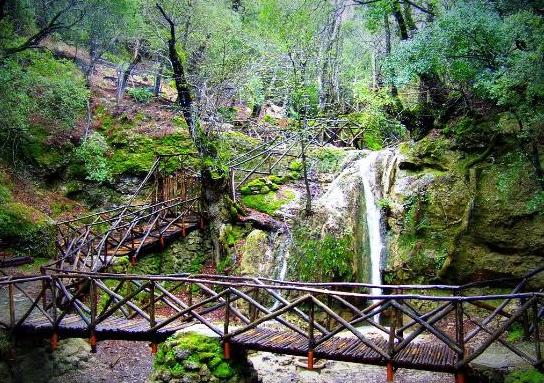
On the other side of the city you can visit Rodíni Park, a true paradise with many peacocks, streams and paths amidst oleander bushes, cypress, maple and pine trees. Rodini is said to be the site of the famous School of Rhetoric, where prominent Greeks and Romans, including Julius Caesar, Cato the Younger, Cicero, Pompey, Brutus, Cassius and Marc Anthony, studied.
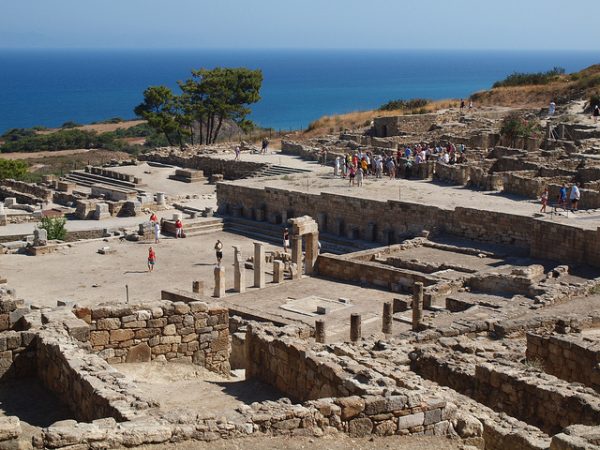
Saint Stefanos Hill (known as Monte Smith) marks the site of the Acropolis, one of the most important centres of worship, education and recreation in ancient times on Rhodes. At the top of the hill you will find the remains of the Temple of Apollo, a Hellenistic stadium and a gymnasium.
